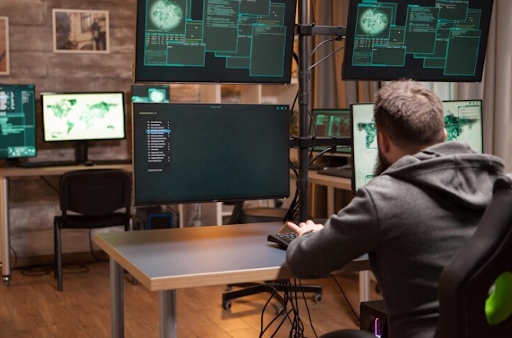
In the digital age, our cities and public institutions stand on the front lines of a battleground where invisible foes continuously launch sophisticated attacks aimed at undermining our safety, operations, and trust. Cybercrime is not a distant threat; it's an immediate challenge that local governments, IT security professionals, and residents are collectively tasked to combat.
Amid the labyrinth of cyber threats, Threat Intelligence (CTI) shines as a beacon of foresight and defense, equipping us with the knowledge and strategic insights needed to pre-empt and respond to malicious activities. This blog will demystify CTI, offering a comprehensive guide that transcends the jargon and reveals the practical steps necessary to fortify our digital perimeters.
Understanding Threat Intelligence (CTI)
At its core, CTI is the analysis of information to understand and preempt cyber threats. Think of it as a specialized branch of business intelligence, tailored to the field of cybersecurity. CTI encompasses data collection and analysis, accompanied by systematic and timely dissemination of actionable insights. By adopting a CTI approach, local governments not only enhance their security posture but also gain a proactive stance in defending against future threats.
CTI is not solely a reactive measure; it is a system built on a foundation of anticipation and preparation. Utilizing a myriad of sources, including open-web data, government reports, and proprietary vendor tools, CTI forms a strategic acumen that forewarns and armors against cyber-espionage, financial fraud, and infrastructure sabotage.
The Four Pillars of Threat Intelligence
1. Strategic Threat Intelligence
Strategic Threat Intelligence focuses on understanding the motives, capabilities, and strategic intents of adversaries. It leverages broad data analysis to identify long-term trends and potential scenarios that could unfold. For a local government, strategic CTI assists in policymaking, resource allocation, and aligning cybersecurity initiatives with overall strategic goals.
2. Tactical Threat Intelligence
Tactical Threat Intelligence narrows the focus to the immediate and near-term. It pertains to current campaigns or threats and equips security teams with the necessary information to take specific, targeted actions to prevent or mitigate these activities. Local IT professionals use tactical CTI to respond rapidly to threats and ensure the safety of critical local data.
3. Technical Threat Intelligence
Moving further inside the workings of a threat, Technical Threat Intelligence provides in-depth understanding of how adversaries operate on a technical level. It dissects the malware tactics, techniques, and procedures (TTPs) to provide detailed technical information that aids in the detection and response to attacks.
4. Operational Threat Intelligence
Operational Threat Intelligence bridges the gap between tactical action and strategic planning. It helps to align the day-to-day activities of security professionals with the broader mission of the cybersecurity program. Operational CTI ensures that the right activities are being prioritized to support both immediate and long-term objectives.
CTI Tools and Automation
To handle the volume and complexity of cyber threats, automation is indispensable. CTI tools range from basic analytics software to advanced machine learning algorithms that can sift through mountains of data to identify patterns and anomalies. These tools not only accelerate the detection of threats but also provide security teams with real-time updates on emerging risks.
Automation further enables local governments to maintain an adaptive approach to security that can evolve as the threat landscape shifts. With CTI tools, security professionals can stay ahead of cyber adversaries, continuously enhancing their defenses to thwart even the most devious of attacks.
The CTI Lifecycle
Understanding the CTI lifecycle is instrumental in the implementation of an effective CTI program. This lifecycle consists of three core stages:
1. Collection
In the collection phase, relevant information is gathered from a multitude of sources. This includes internal logs, threat feeds, and reports from external organizations. It's a non-stop endeavor since cyber activity is incessant and data needs are dynamic.
2. Analysis
Collected data undergoes rigorous analysis to transform it into actionable intelligence. Here, information is assessed for its relevance, accuracy, and timeliness. The goal is to distill this data into a format that can drive informed decision-making.
3. Dissemination
The final stage involves the dissemination of analyzed intelligence to stakeholders, including IT teams, executives, and local government bodies. The manner in which intelligence is shared is crucial; clear, contextual, and concise reports are more likely to lead to swift and accurate responses to potential threats.
The CTI lifecycle is a continuous loop that feeds on itself, constantly refining and enhancing the intelligence-gathering process. Each iteration brings with it a deeper understanding of the threat landscape, sharpening the city’s response strategies.
The Proactive Stance of CTI
While CTI is deeply rooted in cybersecurity, its true value lies in its power to shift our mindset from one of reaction to anticipation. Proactive CTI programs not only protect against known threats but also against unforeseen dangers that may lurk over the horizon.
By investing in CTI, local governments demonstrate a commitment to their residents' safety and the integrity of public institutions. They take a stand against cybercrime not meekly, but with calculated resolve and intelligence. It’s a strategy that doesn’t just combat cyber threats, it precludes them — ensuring that our cities remain secure, vigilant, and resilient in the face of modern-day adversities.
Conclusion
Threat Intelligence is the linchpin of any successful cybersecurity initiative. In an era where digital disruptions are the norm, and cybercrime is rampant, CTI is not an optional defense strategy; it’s a strategic imperative. By harnessing the guidance provided in this guide, local government officials, IT security professionals, and city residents can work together to build a stronghold that stands against the tide of cyber threats.
The future of cybersecurity is filled with uncertainty, but with CTI, one certainty prevails — that when it comes to safeguarding our digital lives, knowledge, and foresight are our strongest allies. It’s time to equip ourselves with the tools and techniques prescribed in this post and join the front lines of cyber-resistance. Our cities depend on it.
Add comment
Comments