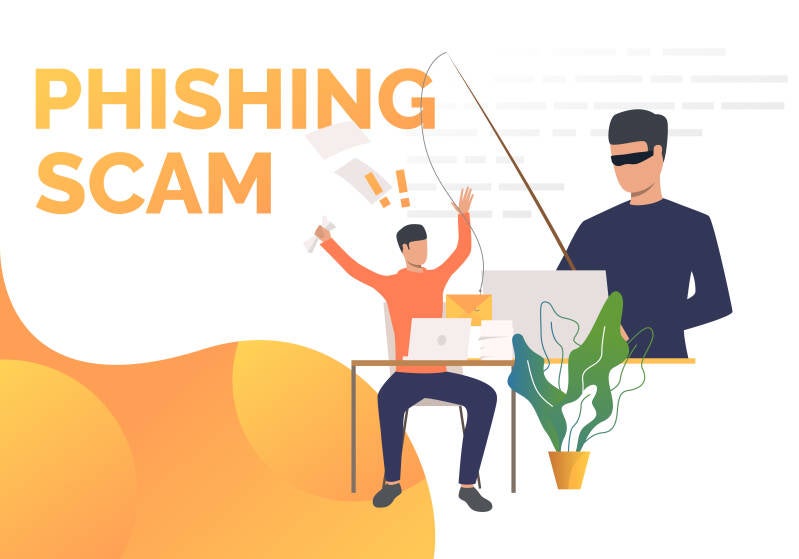
Think of the last suspicious email you received. It probably had tell-tale signs of a scam: a generic greeting, strange formatting, or an urgent but vague request from a bank you don't even use. These are the classic signs of a standard phishing attack—casting a wide net and hoping someone bites. But what happens when the email looks like it was written just for you?
This is the world of spear phishing, a more dangerous and targeted form of cyberattack. Unlike broad phishing campaigns that blast messages to thousands, spear phishing focuses on a specific individual or organization. Attackers do their homework, gathering personal details from social media, company websites, and other public sources to craft a believable and persuasive message. This personalized approach makes it much harder to spot the deception.
This post will explore the mechanics behind spear phishing and its costly cousin, Business Email Compromise (BEC). Understanding how these sophisticated attacks work is the first step toward building a stronger defense for your organization.
What is Spear Phishing?
Spear phishing is a targeted email-based attack designed to trick a specific person into revealing sensitive information, deploying malware, or transferring funds. The "spear" metaphor highlights its precision; instead of casting a wide net, the attacker aims at a single, high-value target.
The success of a spear phishing attack hinges on trust and familiarity. Attackers invest time researching their targets to create highly personalized emails. They might reference a recent project you worked on, mention a colleague by name, or mimic the communication style of your CEO. By using these context-specific details, they lower your natural defenses and make the fraudulent request seem legitimate.
For example, an attacker might pose as your IT department, referencing a recent system update and asking you to "re-verify" your login credentials on a fake portal. Because the email looks credible and mentions a real company event, you're more likely to comply without suspicion.
From a Single Spear to a Full-Blown Breach
When spear phishing targets an organization's finances, it often evolves into a Business Email Compromise (BEC) attack. The FBI identifies BEC as one of the most financially damaging online crimes. In a BEC scam, attackers impersonate executives or vendors to trick employees with financial authority into making unauthorized wire transfers.
These attacks follow a disturbingly effective pattern:
- Reconnaissance: The cybercriminal identifies a target organization and researches its key employees, particularly those in finance or with authority to approve payments. They study the company's structure, vendor relationships, and communication patterns.
- Impersonation: The attacker spoofs or gains access to a senior executive's email account (like the CEO or CFO). They then craft a message to a lower-level employee, often with a tone of urgency and authority.
- The Deceptive Request: The email will typically request an urgent wire transfer to a "new" vendor account or ask for copies of sensitive data like employee tax forms. The attacker will often insist on secrecy or direct communication to prevent the employee from verifying the request through normal channels.
Because the request appears to come from a position of authority and often contains plausible details, many employees feel pressured to act quickly without questioning it. This simple act of deception can lead to staggering financial losses and severe data breaches.
Real-World Examples of a Phishing Attack
The consequences of these cyberattacks are not just theoretical. In one high-profile case, the social media giant Facebook and tech leader Google were victims of a prolonged BEC scheme that cost them a combined $100 million. The attacker posed as a large hardware vendor they both worked with, sending fraudulent invoices and directing payments to his own bank accounts over a two-year period.
In another instance, a U.S. aerospace company lost over $40 million when an employee was tricked by a spear phishing email impersonating the CEO, who requested funds for a secret corporate acquisition. These examples show that even the most sophisticated organizations are vulnerable.
How to Defend Against a Cyberattack?
Protecting your organization from spear phishing and BEC requires a multi-layered security strategy that combines technology, processes, and—most importantly—people.
Strengthen Your Technical Defenses
- Advanced Email Filtering: Implement email security solutions that can detect spoofed emails, malicious links, and suspicious attachments. Many modern systems use AI to analyze email content and flag potential phishing attempts.
- Multi-Factor Authentication (MFA): Enforce MFA across all critical systems, especially email and financial applications. Even if an attacker steals a password, MFA provides an essential second barrier to prevent unauthorized access.
Refine Your Internal Processes
- Verification Procedures: Establish a strict protocol for verifying any requests for wire transfers or changes to vendor payment information. This should involve a secondary confirmation method, such as a phone call to a known contact number—never use the contact information provided in the suspicious email.
- Limit Public Information: Be mindful of the information your organization and employees share online. Details about company structure, roles, and even out-of-office replies can provide valuable intelligence for attackers.
Empower Your People
- Continuous Security Training: Regular, engaging security awareness training is your most powerful defense. Go beyond annual slideshows and conduct simulated phishing attacks to test employee vigilance. These exercises provide a safe environment for employees to learn how to identify and report suspicious emails.
- Cultivate a Culture of Skepticism: Encourage employees to question any unusual or urgent requests, especially those involving money or data. Make it clear that it is always better to pause and verify than to risk a major security incident. Foster an environment where reporting a potential threat is praised, even if it turns out to be a false alarm.
Stay Vigilant, Stay Secure
Spear phishing and Business Email Compromise represent a significant evolution in the world of cybercrime. By moving beyond generic bait and crafting personalized cyberattack, criminals have found a potent way to exploit human trust.
While technology provides a crucial line of defense, it can't be the only one. A truly resilient organization is one where every employee is an active participant in its security. By combining robust technical safeguards with clear procedures and ongoing education, you can create a human firewall that is far more difficult to breach. The next time a suspicious email lands in your inbox, you'll be ready to look beyond the bait.
Add comment
Comments